Bobwhite quail
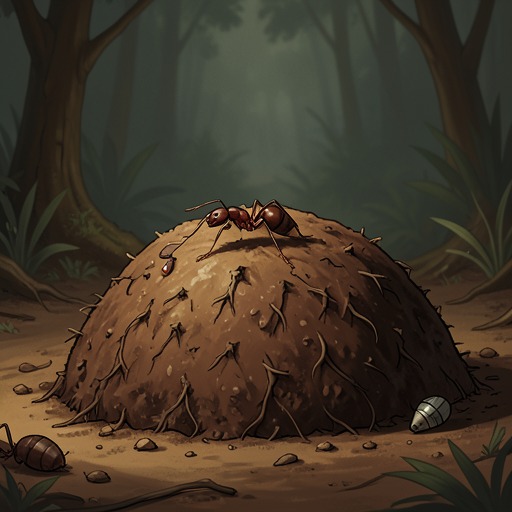
Silent SpringThe Bobwhite quail is one of Rachel Carson’s clearest examples of how an insecticide campaign aimed at one pest could devastate wildlife that was never its intended target. A ground-nesting bird that forages on treated land, it was nearly eliminated from some areas exposed to fire-ant poisons; field surveys found dead quail, and analyses confirmed lethal insecticide residues. The quail’s fate makes the cost of broad chemical control visible not as an abstraction, but as a loss counted in coveys, acreage, and bodies.
A test of pesticide effects on reproduction
Rachel Carson places the Bobwhite quail within a larger body of evidence about insecticides and bird reproduction. Experiments by James DeWitt of the United States Fish and Wildlife Service showed that exposure to DDT and related chemicals could impair reproduction even when adult birds displayed no observable injury. The effects varied, but the outcome could be severe: quail fed DDT throughout the breeding season survived and produced normal numbers of fertile eggs, yet few eggs hatched. The failure therefore could remain concealed while the parent birds appeared healthy and reproduction seemed, at first, to have proceeded normally.
The evidence distinguishes adult survival from successful renewal of a population. In DeWitt’s experiments, embryos often developed through early incubation before dying during the hatching period. The birds’ apparent health was no assurance that their offspring would survive. Carson’s account uses this distinction to show why visible poisoning is an incomplete measure of harm: reproductive damage may emerge only at the next generation, after exposure has already compromised the population’s continuation.
A ground-nesting bird in a spraying campaign
The quail’s vulnerability became especially stark in the fire-ant campaign. When the United States Department of Agriculture began its program, officials had promoted the fire ant as a threat to southern agriculture and wildlife, including the young of ground-nesting birds. But the broad-lethal treatment meant to combat the ant exposed the birds living and feeding on treated land to the poisons themselves. Carson emphasizes the reversal: a campaign justified partly by concern for wildlife helped produce a direct and extensive wildlife loss.
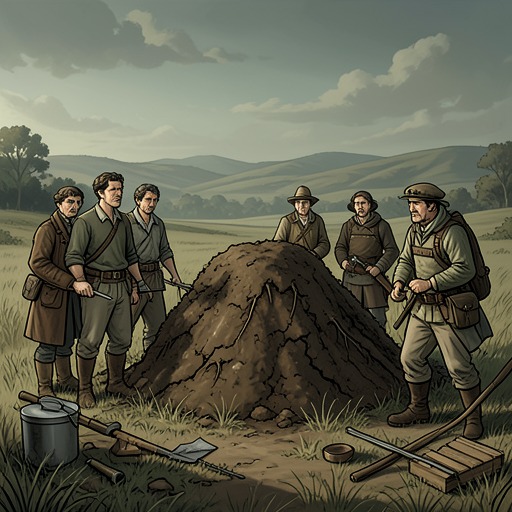
In Alabama, biologists from the Alabama Cooperative Wildlife Research Unit counted the quail in a 3,600-acre area scheduled for treatment. Before spraying, the area held thirteen resident coveys, comprising 121 birds. Two weeks after treatment, investigators could find only dead quail. Specimens sent to the Fish and Wildlife Service contained insecticides at levels sufficient to cause death. The sequence—from a documented pre-treatment population to carcasses and confirmed residues—gave the campaign’s consequences a precision that official assurances could not erase.
Losses across treated areas
The Alabama findings were not isolated. In Texas, a 2,500-acre area treated with heptachlor lost all its quail. The same area also lost 90 percent of its songbirds, and analyses detected heptachlor in the tissues of dead birds. Together, the two cases show the breadth of the impact: in Alabama, a known population of 121 quail disappeared within two weeks of treatment; in Texas, quail were wiped out across a separate treated tract, amid a much wider decline in bird life.
The quail’s ground-nesting and foraging habits made the treated acreage part of its immediate habitat, not a distant chemical target. The evidence does not present the bird as an incidental statistic in a general argument. It gives the losses their own scale and circumstances: coveys counted before treatment, dead birds found afterward, and poison identified in the remains. That chain of observation links the landscape-level decision to individual animal deaths and to the local disappearance of a population.
The bird as evidence of campaign failure
Carson sets these field results against the official case for the fire-ant program. Congressional support had initially been secured through claims that were later discredited, while the program’s damaging effects accumulated in studies by state and federal wildlife agencies and universities. The quail counts and residue analyses belong to this growing record. They challenge a definition of success that considers only whether the targeted pest is controlled, while treating losses among wildlife as secondary or dismissible.
The book’s wider argument began from concern about the widespread use of persistent poisons such as DDT and the danger they posed to wildlife, habitats, and human life. In the quail’s case, that concern takes a concrete form. The deaths following heptachlor treatment echo the experimental evidence that insecticides can damage birds without first making adult injury obvious; the field evidence then shows what broad application can mean on a treated landscape. The quail thus stands both for acute mortality and for the broader principle that chemical control can disrupt the life a campaign claims to protect.